
 Pellet production plant
 Seed / Grain treating equipment
 Biochar production plant
 Other energy solutions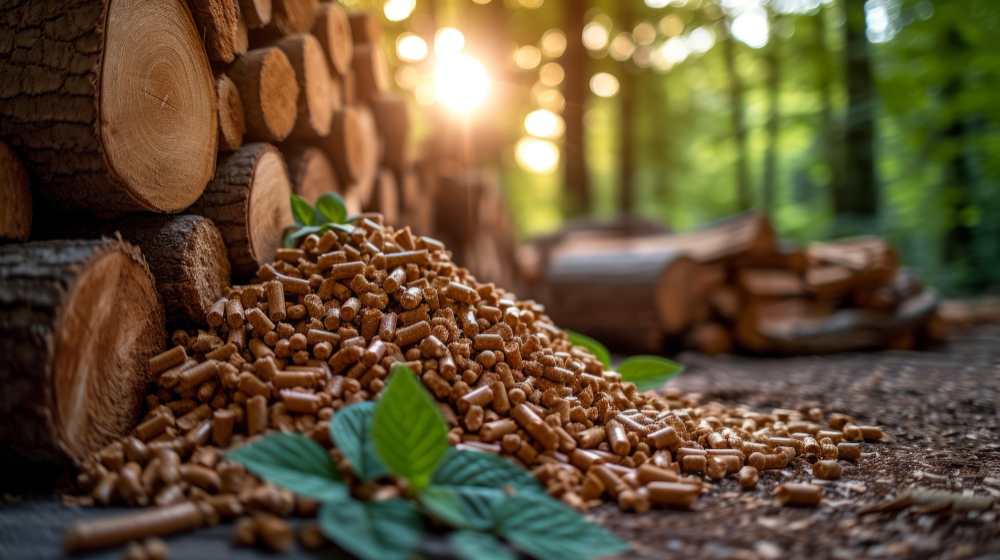
Every harvest season, farmers across the globe are left with thousands of tonnes of agricultural residue — sunflower husks, nut shells, crop stalks, animal manure — with no profitable outlet. Most of it is burned in open fields, buried, or simply left to decompose. But what if that same waste could generate a reliable second income stream, reduce your carbon footprint, and plug into the fast-growing global renewable energy market?
Biomass pellet production is transforming how agricultural businesses think about waste. With the right turnkey pellet plant, farm residues become high-density, high-value fuel pellets that are in demand across Asia, Europe, Africa, and the Americas. This guide walks you through everything you need to know — from what biomass pellets are to how to choose the right production plant for your farm.
01 What Are Biomass Pellets?
Biomass pellets are compressed, high-density cylinders of organic material — typically 6–8 mm in diameter — produced by forcing dried and milled biomass through a die under high pressure. Unlike raw biomass, pellets have a standardised moisture content (usually below 10%), a uniform shape for easy handling, and a far superior energy density.
Key differences vs. raw biomass:
- Energy density: Pellets pack 3–5x more energy per cubic metre than loose biomass
- Storage: Compact and moisture-resistant — ideal for long-term storage
- Transport: Lower logistics costs due to uniform size and weight
- Combustion: Cleaner and more efficient burn, lower particulate emissions
- Market ready: Globally traded as a standardised commodity
02 What Farm Waste Can Be Turned Into Pellets?
One of the greatest advantages of modern pellet production technology is its flexibility. Industrial pellet lines are engineered to process a wide variety of agricultural and forestry by-products, including:
- Sunflower husks: A high-volume by-product of oilseed processing. Excellent calorific value and widely used in European biomass energy markets.
- Nut shells: Almond, walnut, and groundnut shells produce premium-quality, hard pellets with high energy density.
- Crop stalks & agricultural residues: Wheat straw, rice husk, corn cobs — all viable feedstocks when properly dried and milled.
- Animal manure: Particularly from poultry and cattle operations. Requires specialised drying systems but produces nutrient-rich pellets used in both energy and fertiliser markets.
- Wood chips, sawdust & shavings: Ideal for farms with adjacent forestry operations or timber processing activities.
- Mixed biomass: Blended feedstocks can be processed when consistent moisture and particle size are maintained.
03 Why Biomass Pellets Are a Smart Business Move for Farmers
The economics of biomass pellet production have never been more compelling for agricultural businesses. Here’s why:
Turn Waste Into Revenue
Agricultural residues that cost money to dispose of — or that go to waste entirely — become a sellable commodity. Pellets trade on established commodity markets globally, and demand is growing as countries implement stricter renewable energy mandates.
Regulatory & Environmental Compliance
Open burning of crop residues is increasingly restricted across major agricultural markets. Converting residues into pellets sidesteps burning bans entirely, while producing a product that actively reduces carbon emissions versus fossil fuels.
Lower Storage & Logistics Costs
Raw biomass is bulky, perishable, and expensive to transport. Pellets — uniform in size, low in moisture, and highly dense — dramatically reduce storage footprint and shipping costs, making long-distance export economically viable.
Growing Global Demand
Biomass pellets are a key pillar of renewable energy strategies across the EU, UK, Japan, South Korea, and increasingly across Southeast Asia and Africa. Industrial buyers, power plants, and district heating networks are actively seeking long-term supply contracts.
04 What Does a Pellet Production Plant Actually Include?
A professional-grade turnkey pellet production plant is a fully integrated production line, not a single machine. Understanding the full process helps you evaluate proposals and ensure you’re investing in a complete, reliable system.
Crushing / Milling
Raw materials must be reduced to a consistent particle size before pelletisation. Hammer mills and shredders are configured to your specific feedstock.
Drying Systems
Moisture content must be reduced to below 12–15% for efficient pellet formation. Industrial drum dryers or belt dryers are matched to your material type and local energy availability.
Pellet Press Machines
The heart of the plant. High-pressure ring die or flat die presses force prepared biomass through precision-engineered dies to form uniform pellets. Technology backed by 70+ years of manufacturing expertise ensures consistent output and low downtime.
Cooling Equipment
Freshly pressed pellets exit the die at 80–90°C and must be cooled and hardened before handling. Counter-flow coolers are standard in professional lines.
Screening
Fines and broken pellets are separated and recycled back into the process, ensuring only quality product reaches packaging.
Packing & Bagging Lines
Automated bagging systems for 15kg, 25kg, or big-bag formats, with options for bulk loading for industrial customers.
Automation & Control Systems
Modern pellet plants feature PLC-based automation that monitors and adjusts the entire line in real-time, reducing labour requirements and ensuring consistent quality.
Installation Support & Layout Design
A genuine turnkey provider engineers the entire plant layout for your site and provides on-site installation and commissioning support.
05 How to Choose the Right Pellet Plant for Your Farm
Not every pellet plant is right for every operation. Here’s what agricultural professionals need to evaluate before committing to a solution:
- Capacity requirements: Are you processing waste from a single farm, a farming co-operative, or building a standalone commercial pellet business? Plants are scalable from compact lines producing 500 kg/hr to large industrial facilities exceeding 10 tonnes/hr.
- Feedstock characteristics: Your local raw material — its moisture level, particle size, density, and fibre composition — directly determines the drying, milling, and pressing configuration needed. A reputable supplier will configure machinery specifically for your material.
- Climate and operating conditions: Equipment destined for tropical, arid, or high-altitude environments needs to be configured accordingly. Ensure your supplier accounts for local climate in the technical specification.
- After-sales support: The best machine in the world is only as good as the support behind it. Look for suppliers who offer technical guidance, spare parts availability, and on-site service capability.
- Turnkey vs. piecemeal: Buying individual machines from multiple suppliers creates integration risks and support complexity. A single turnkey pellet plant provider is accountable for the entire line’s performance.
06 The Global Demand & Export Opportunity
For agricultural businesses ready to think beyond local markets, biomass pellets represent a genuine export opportunity. Global pellet trade has grown consistently as countries across Europe, Asia, and Africa accelerate their transition away from coal and fossil fuels.
Farmers who invest in pellet production capacity today are positioning themselves at the supply end of one of the fastest-growing renewable energy commodities in the world. With the right plant, the right feedstock, and access to export logistics, your farm’s waste becomes a globally traded fuel.
Ecosphere Innovations serves clients across Asia, Africa, Europe, and the Americas, with proven export expertise that includes fast delivery, smooth customs clearance, and professional documentation — critical factors when machines need to cross borders reliably.
07 Why Partner With Ecosphere Innovations?
- Complete pellet plant solutions from raw material preparation to finished product packaging
- 70+ years of industry expertise behind every machine
- Over 5,500 units of pellet presses manufactured and sold globally
- Customised configurations based on your material, production capacity, and location
- Reliable technical guidance and after-sales support
- Proven performance across diverse agricultural, industrial, and environmental conditions
- Full export support: documentation, customs, and climate-specific configuration
💡 Ready to get started? Whether you want a compact line or a full-scale industrial manufacturing plant, Ecosphere Innovations can design the right solution. Share your project details — feedstock type, estimated volume, location — and receive a tailored, complete pellet plant proposal.
Ready to Turn Your Farm Waste Into Fuel?
Contact Ecosphere Innovations to get your custom pellet plant proposal — tailored to your feedstock, capacity, and location.
Get Your Custom Proposal →